
California Court Records
California court records are public files kept by 58 superior courts across the state. Each county runs its own superior court. These courts handle civil, criminal, family law, probate, and small claims cases. You can search many of these records through online portals that each county offers. Some records also sit at the state level, like appellate case filings and criminal history data held by the Department of Justice. This page covers how to find, search, and get copies of court records in California, along with the fees, access rules, and tools you will need to start your search.
California Court Records Quick Facts
How California Court Records Work
California has one superior court in each of its 58 counties. Every trial-level case in the state goes through a superior court. Civil disputes, criminal charges, family law matters, probate cases, and small claims all land in the same court system. There is no split between different trial court levels like some states have. The Judicial Council of California sets policy for the whole court system, but each superior court runs on its own day to day. The clerk of court in each county keeps case files and handles copy requests. You can search court records by going to the clerk office in person or by using a county online portal if one exists.
Court records are public in most cases. Anyone can ask to see them. You do not need to be part of the case. California law starts from the idea that court records belong to the public.
The California Courts Find My Court tool helps you pick the right court for your search.
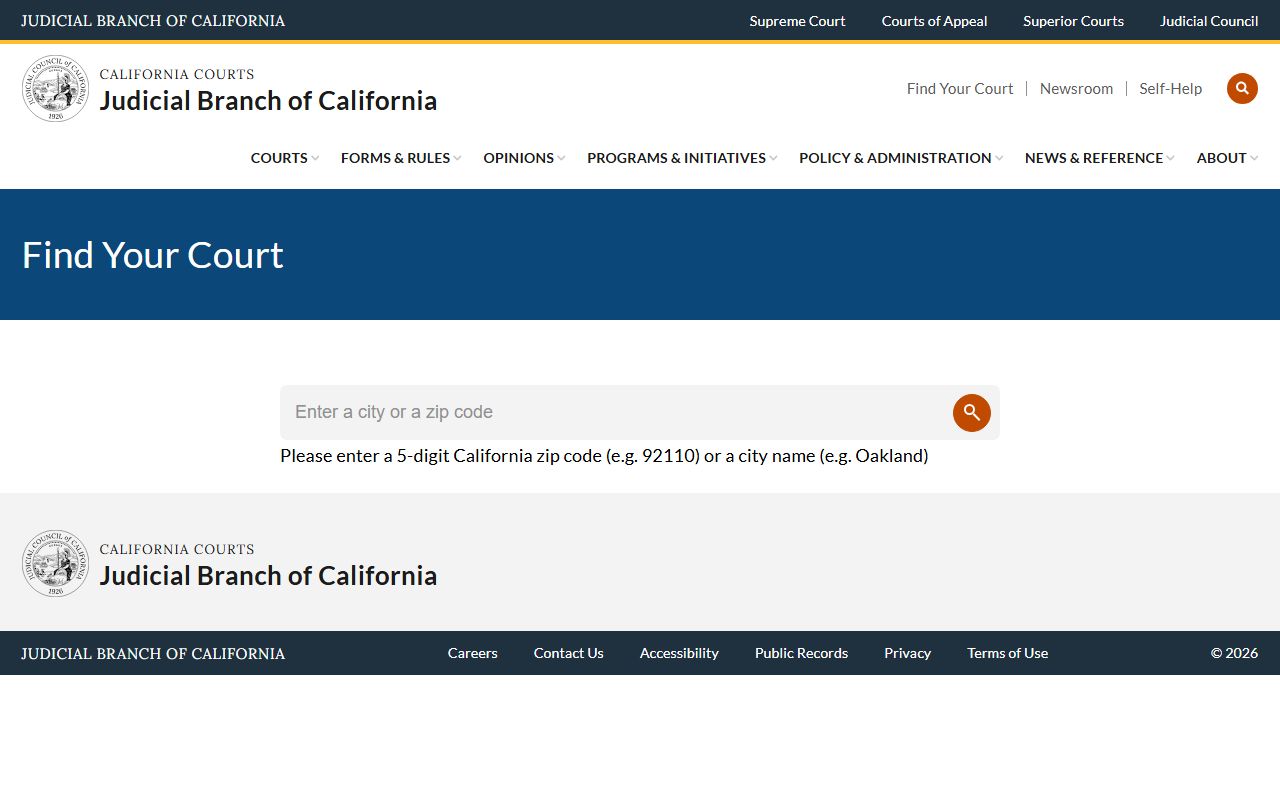
Each superior court has its own address, phone, and hours. Some counties have many courthouse locations. Los Angeles County has over 30 court sites spread across the area. Smaller counties like Alpine or Sierra have just one. The court finder tool on the state courts site lets you search by address or zip code to see which courthouse serves your area. It also lists contact info and what services each spot offers, which makes it a good first step when you need to find California court records but are not sure where to start looking.
Search California Court Records Online
Most California counties now have some form of online case search portal. These portals let you look up cases by name, case number, or filing date. Some counties use Tyler Technologies Odyssey. Others run Journal Technologies systems. A few large counties built their own custom platforms. The level of detail you can see varies by county and case type. Civil cases tend to have the most info available through remote access. You can often see the full register of actions, which logs every event in a case from start to finish. Some counties also let you view and download documents for a small fee per page, while others only show the case index and calendar data for court records in California.
The California Appellate Courts Case Information System covers appeals at the state level.
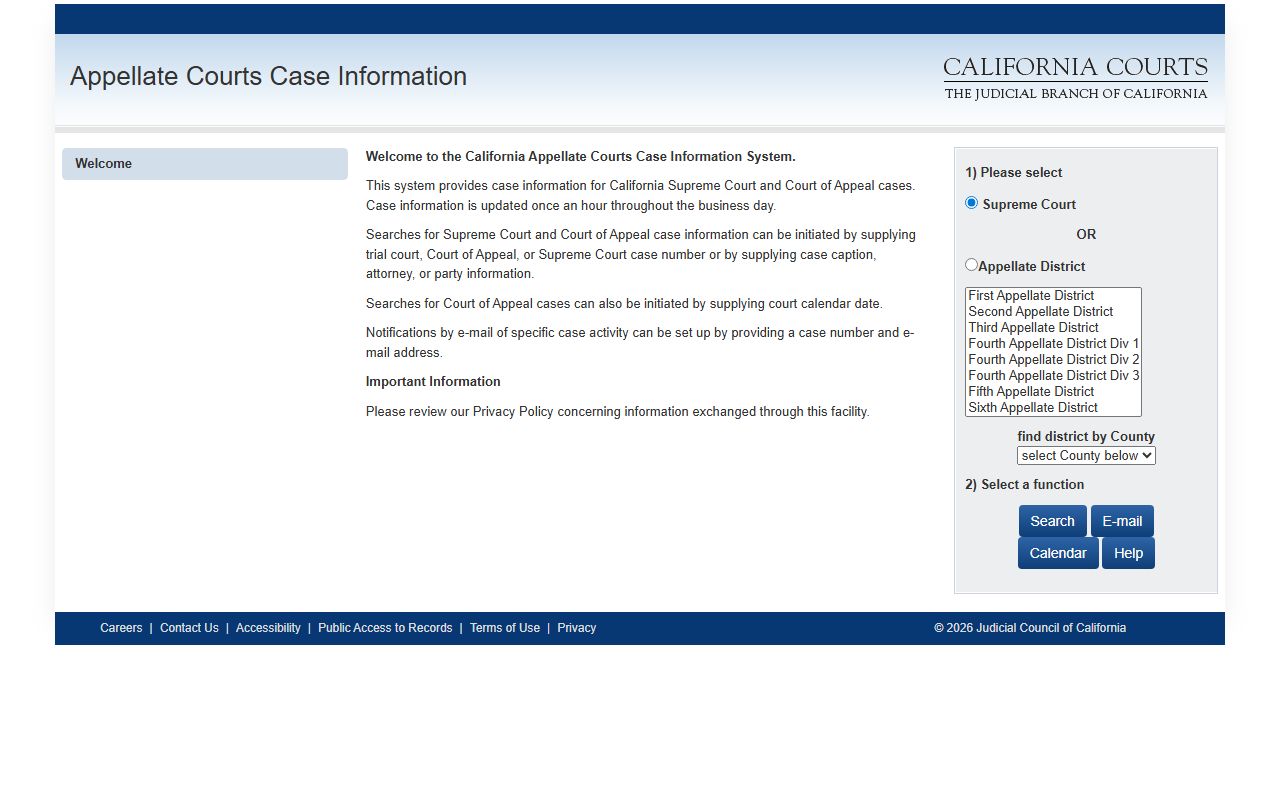
This system has case data for the California Supreme Court and all six Courts of Appeal. Case info gets updated once an hour during business hours. You can search by party name, case number, or attorney name. Each appellate district has its own search page, but you can also search across all districts at once. The system shows docket entries, filing dates, and case status. Published opinions link directly from case records. This tool is free and open to all. If you need trial court records, though, you must go to the county superior court where the case was filed. Appellate court records only cover cases that moved past the trial court level in California.
For the best results on any California court records search, have the full name and rough dates ready. A case number speeds things up if you have one.
Electronic Access to California Court Records
California Rules of Court set specific rules about electronic access. Rule 2.503 says courts must give electronic access to registers of actions, calendars, and indexes in all case types. For civil cases, courts must provide access both at the courthouse and online to the extent they can. But several case types face tighter limits. Family law, juvenile, criminal, guardianship, mental health, civil harassment, and other sensitive case types may only be viewed on courthouse terminals. Remote online access to the full documents in these case types is not allowed under the rule. This is why you may find far less criminal and family case info online compared to civil court records in California.
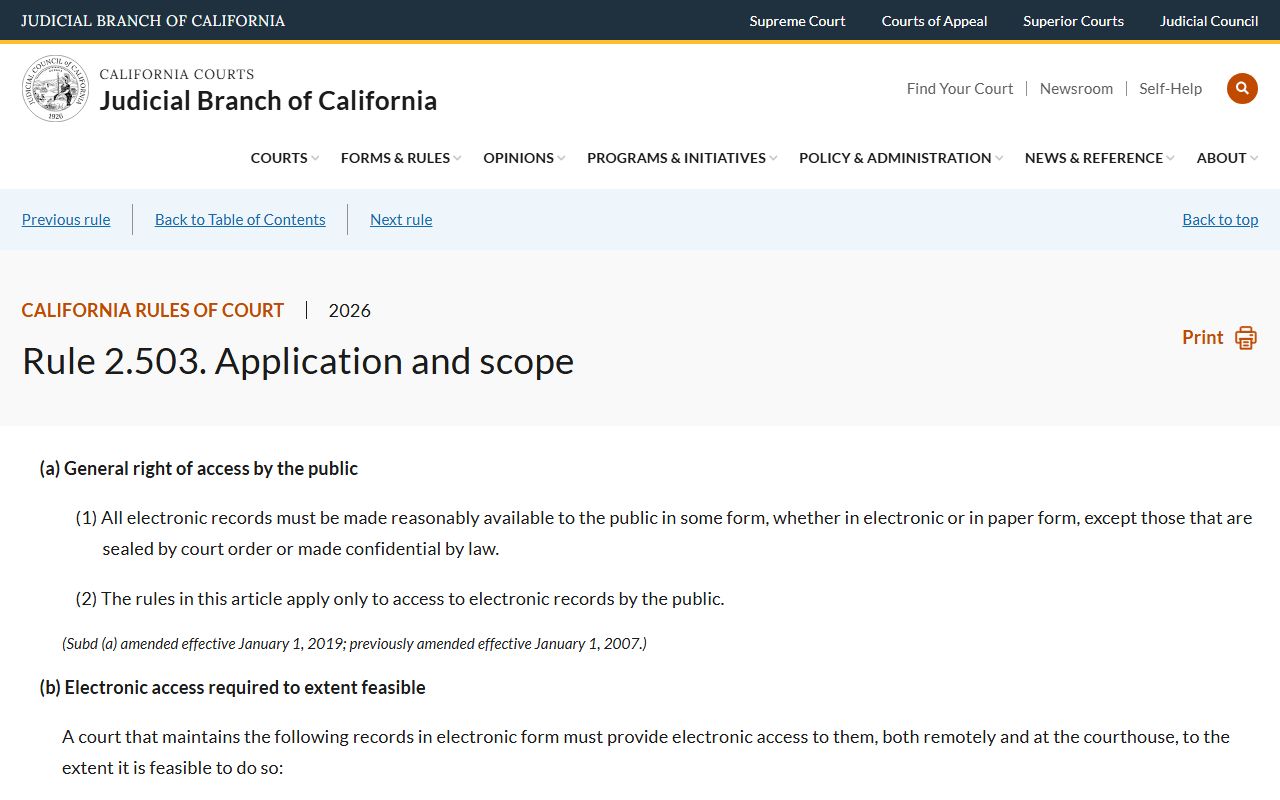
That rule defines the line between what is online and what is not for California court records.
Rule 2.550 covers sealed records. Courts start from the idea that all records are open to the public. A judge can only seal records after making specific findings. There must be a strong reason that outweighs the public right of access. The seal must be narrow. No less strict option can work instead. Sealed court records are the exception in California. If a record is sealed by court order, you cannot view it through any method, online or at the courthouse.
Criminal Records in California
Criminal case records from superior courts are different from criminal history records kept at the state level. Each county superior court has files for criminal cases filed there. These include the charges, pleas, trial records, and sentencing orders. You can view the register of actions and calendar info online for criminal cases in many counties. But under Rule 2.503, full case documents in criminal matters are only available at courthouse terminals, not through remote access. So online criminal court records in California tend to show less detail than civil case records.
The California Department of Justice keeps a separate set of criminal history records. The DOJ Record Review portal lets individuals request their own criminal history summary.
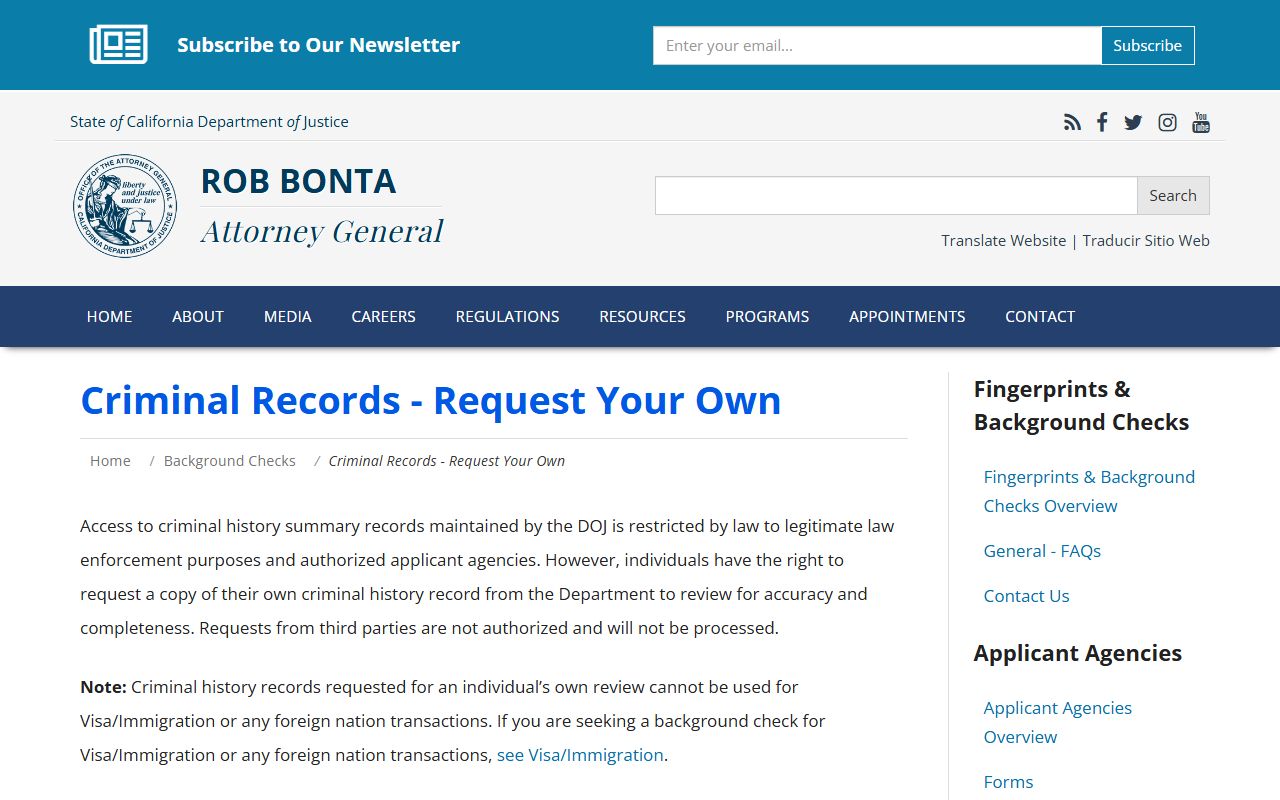
Only the person whose record it is can make this request through the DOJ. You must submit Live Scan fingerprints to verify your identity. The DOJ charges a $25 processing fee. Law enforcement and approved agencies can access criminal history data for official uses, but the general public cannot look up another person's DOJ criminal record. This is different from court case records, which are public. If you need criminal case details about someone else, go to the superior court in the county where the case was filed. The DOJ record review process is strictly for checking your own records in California.
The DOJ Live Scan locations database shows where to submit fingerprints across California.
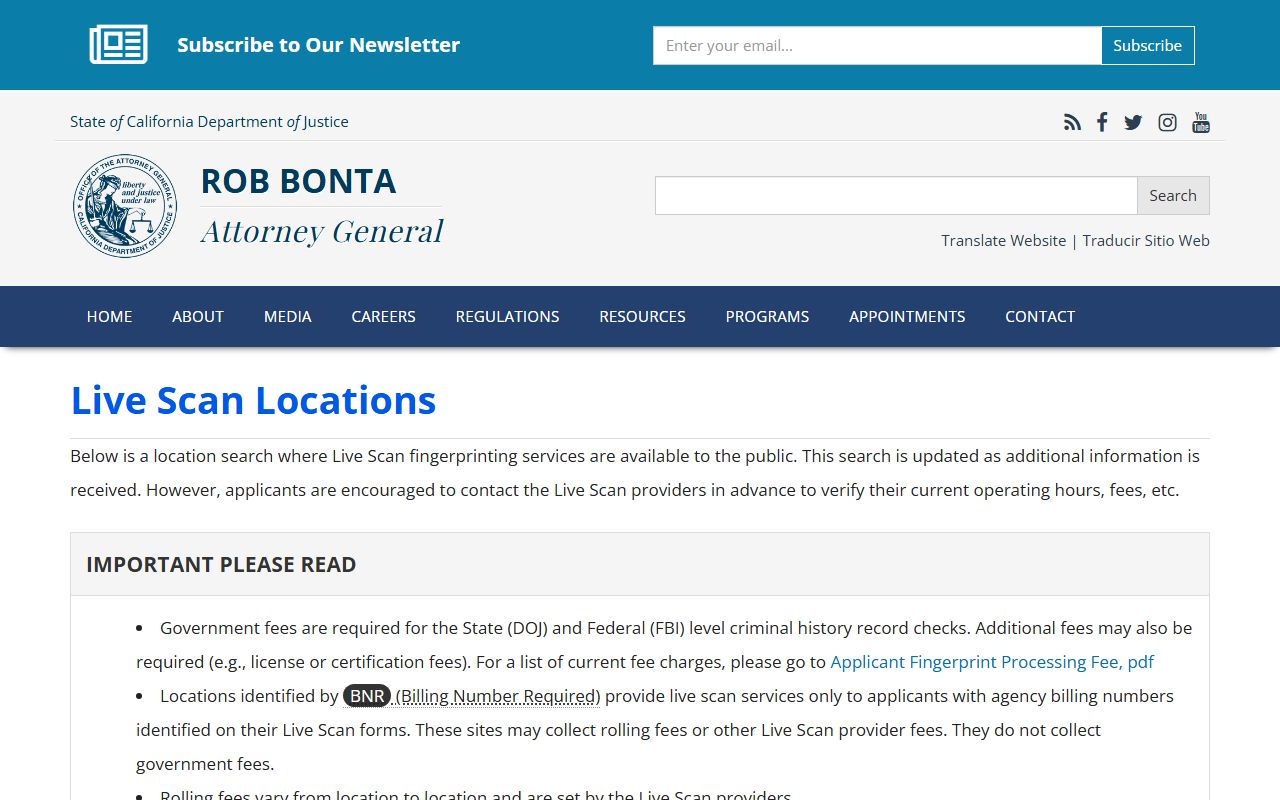
Live Scan sites are found at police stations, sheriff offices, and private service providers throughout the state. You can search the database by city or zip code to find a location near you.
Court Record Fees in California
California has a statewide fee schedule for court records set by the Government Code. These fees apply at every superior court. Most people pay them when they need official copies of court documents. You can look at records in person at the courthouse for free in most cases. Fees kick in when you want the clerk to make copies, certify documents, or run a search on your behalf. Some counties also charge for online document access, though a few have dropped those fees.
The standard court records fees in California are:
- Plain copies: $0.50 per page (Government Code 70627)
- Certified copies: $40.00 per document (Government Code 70626)
- Record search over 10 minutes: $15.00 (Government Code 70627)
- Exemplification of a record: $50.00 (Government Code 70628)
- Certified copy of dissolution record: $15.00 (Government Code 70674)
Some courts charge extra for online access. Los Angeles County charges $4.75 per name search for guest users on its online case access system. Orange County charges $0.50 per page for documents from its civil web portal. Sacramento County has dropped all online search and download fees for its Public Case Access System. Fees can change, so check with the specific court before you place your request. If you cannot afford filing fees or copy costs, you may ask the court for a fee waiver. The court will review your income and decide if you qualify for reduced or waived fees on California court records.
California Court Records Laws
The California Public Records Act (Government Code Section 6250) says that access to public records is a basic right of every person in the state. Court records fall under this law. The Act requires that public records be open for inspection and copying. Some exceptions exist for records that are sealed or made private by other laws. But the default rule is openness. Code of Civil Procedure Section 1904 defines a judicial record as the official entry of proceedings in a court, which gives a clear legal basis for public access to court records in California.
Government Code Section 68152 sets how long courts must keep records. Civil case records must be kept for 10 years. Felony records stay for 75 years. Family law records last 30 years. Adoption, parentage, and name change records are kept forever. Unlawful detainer cases that only involve possession are destroyed after one year. These time limits matter when you search for old court records in California. If the retention period has passed, the court may have already destroyed the file under state law.
The California Courts Self-Help Center has free guides on court records, forms, and legal processes.
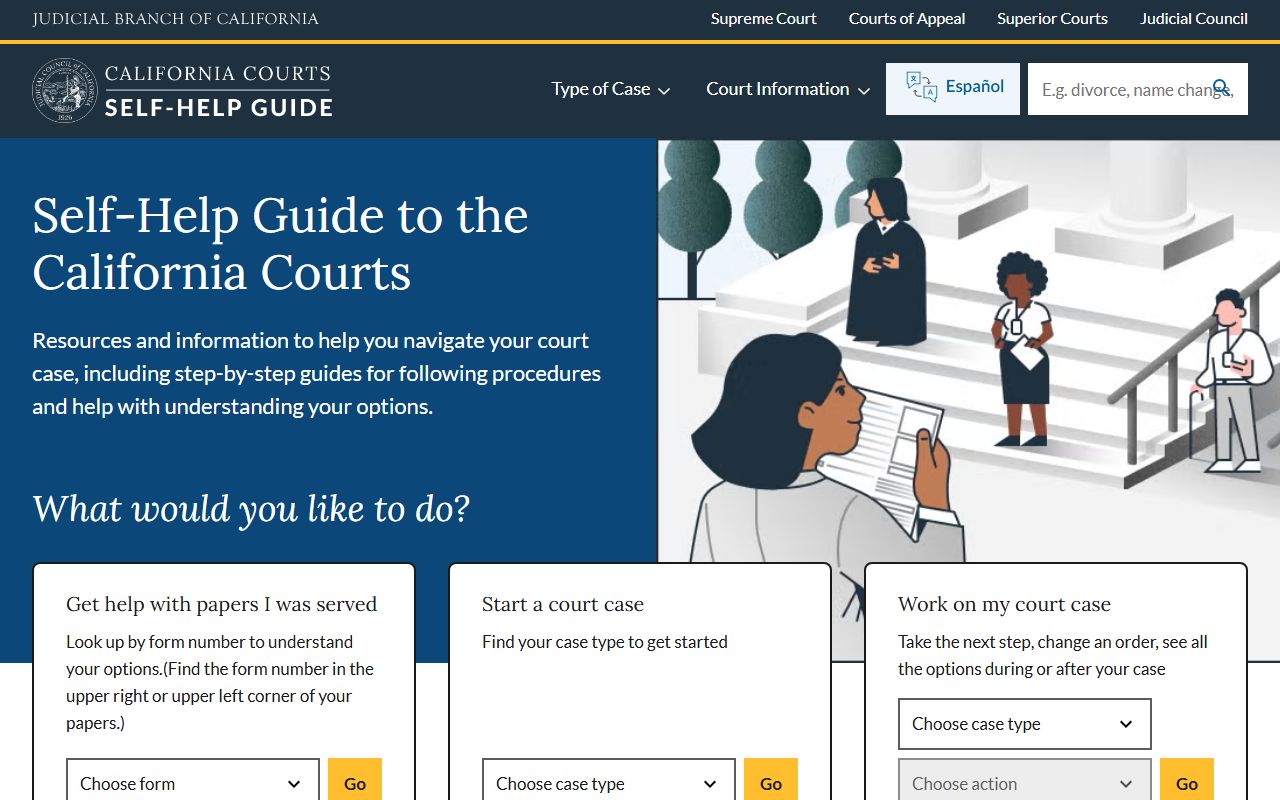
The self-help site covers every area of law heard in California courts. It walks you through how to get records, fill out forms, and understand what your options are. This is a good resource for people who need court records but do not have a lawyer in California.
California Court Opinions
California courts publish opinions that interpret the law. The California Courts opinions page has published and unpublished opinions from the Supreme Court and all six Courts of Appeal.
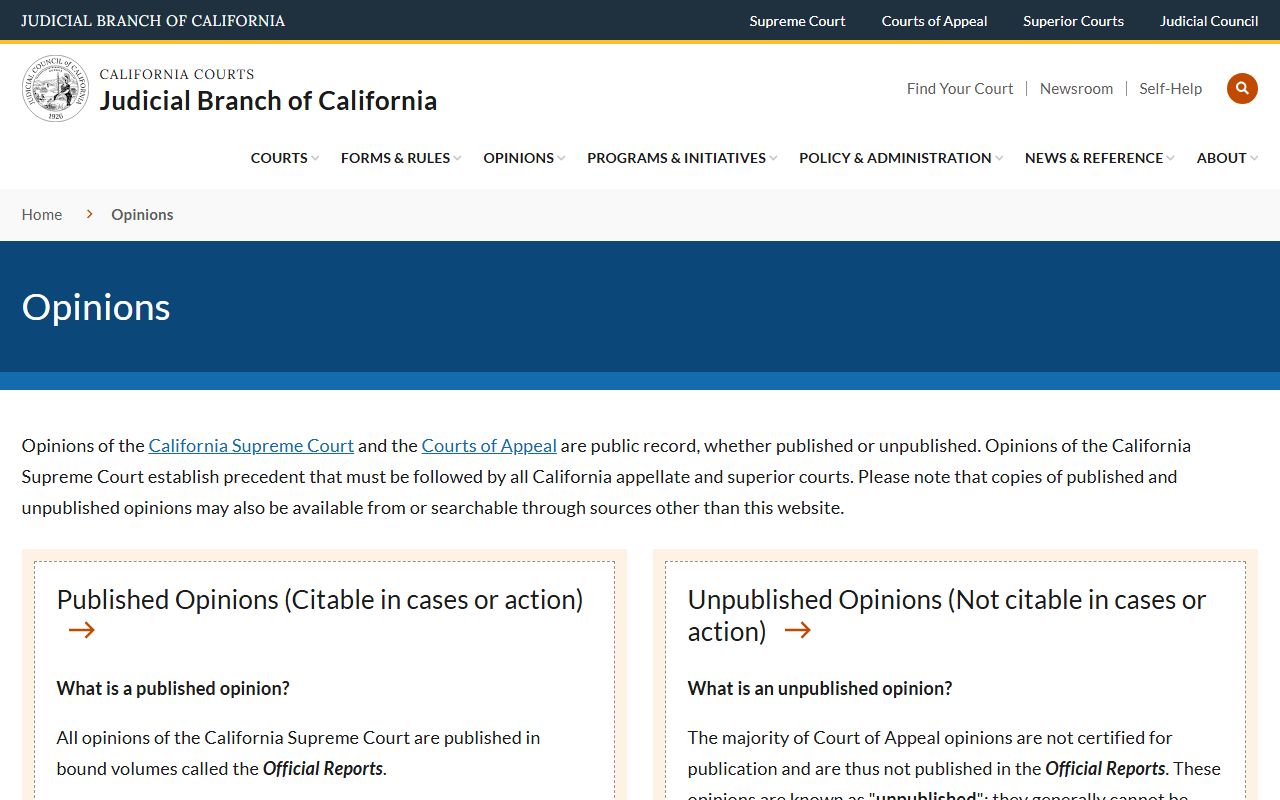
Published opinions are binding law in California. You can search them by date, case name, or topic. This is useful for legal research that goes beyond basic case lookup. Unpublished opinions are also available but cannot be cited as legal authority in most situations. Both types are free to view online and form part of the broader set of California court records that the public can access.
Browse California Court Records by County
Each county in California has its own superior court that keeps court records. Pick a county below to find local contact info, online portals, and record access details for that area.
Court Records in Major California Cities
Residents of major cities file court cases at their county superior court. Pick a city below to learn about court records access in that area.